Emergency Opening
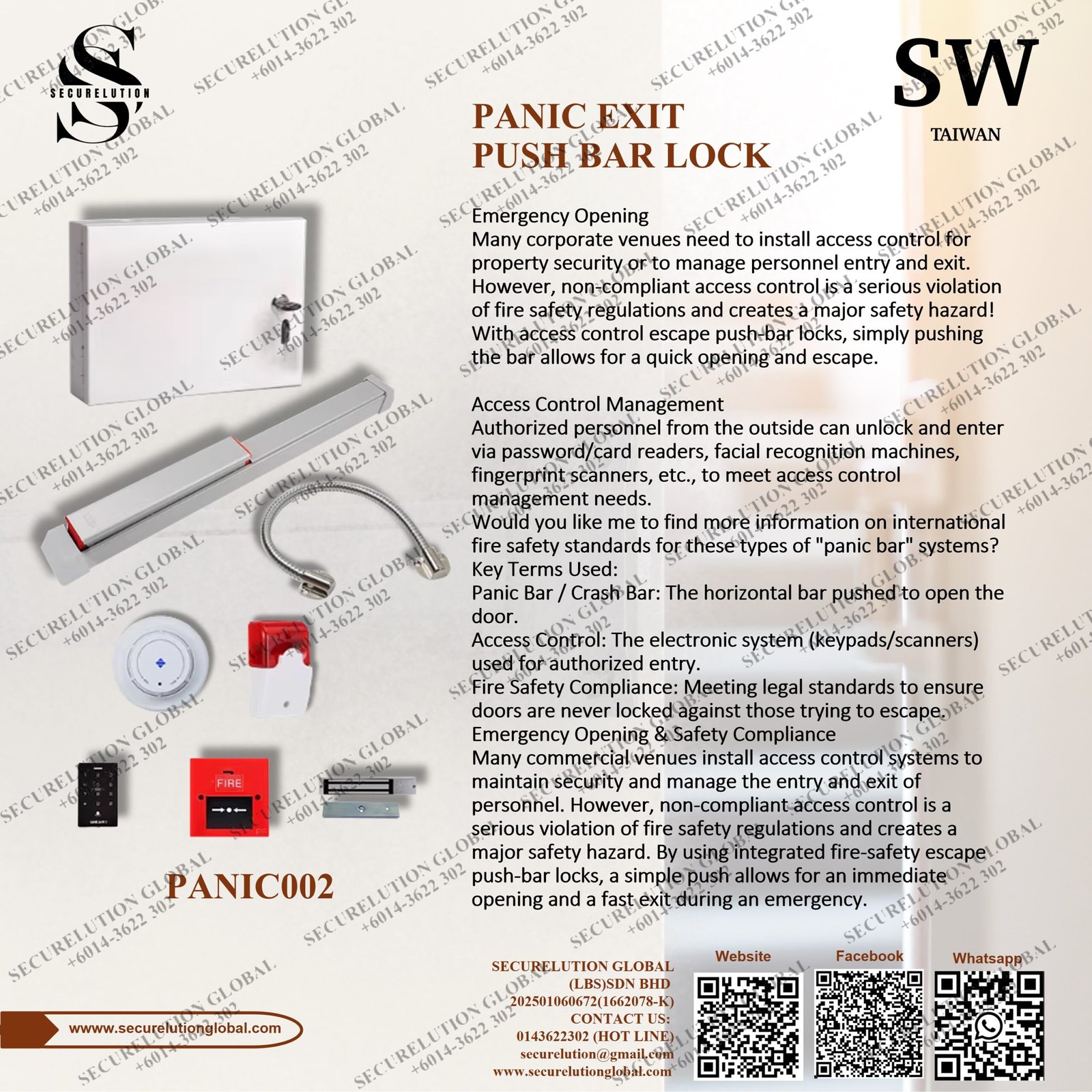
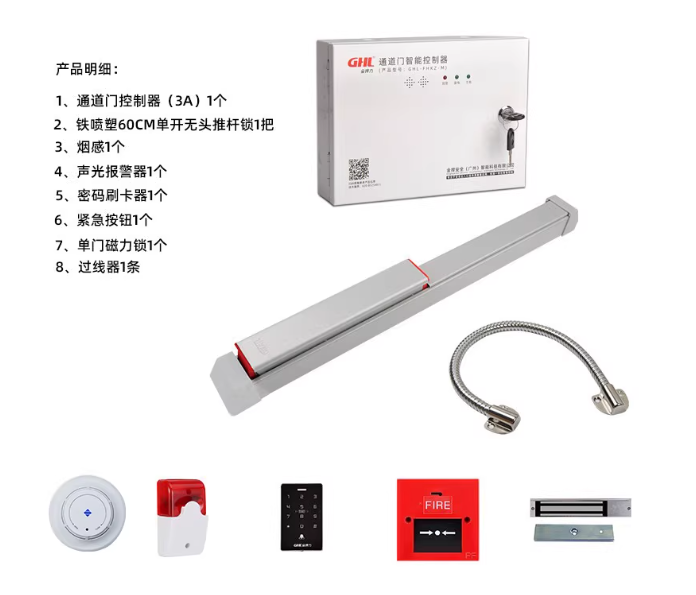
Many corporate venues need to install access control for property security or to manage personnel entry and exit. However, non-compliant access control is a serious violation of fire safety regulations and creates a major safety hazard! With access control escape push-bar locks, simply pushing the bar allows for a quick opening and escape.
Access Control Management
Authorized personnel from the outside can unlock and enter via password/card readers, facial recognition machines, fingerprint scanners, etc., to meet access control management needs.
Would you like me to find more information on international fire safety standards for these types of “panic bar” systems?
Key Terms Used:
- Panic Bar / Crash Bar: The horizontal bar pushed to open the door.
- Access Control: The electronic system (keypads/scanners) used for authorized entry.
- Fire Safety Compliance: Meeting legal standards to ensure doors are never locked against those trying to escape.
Emergency Opening & Safety Compliance
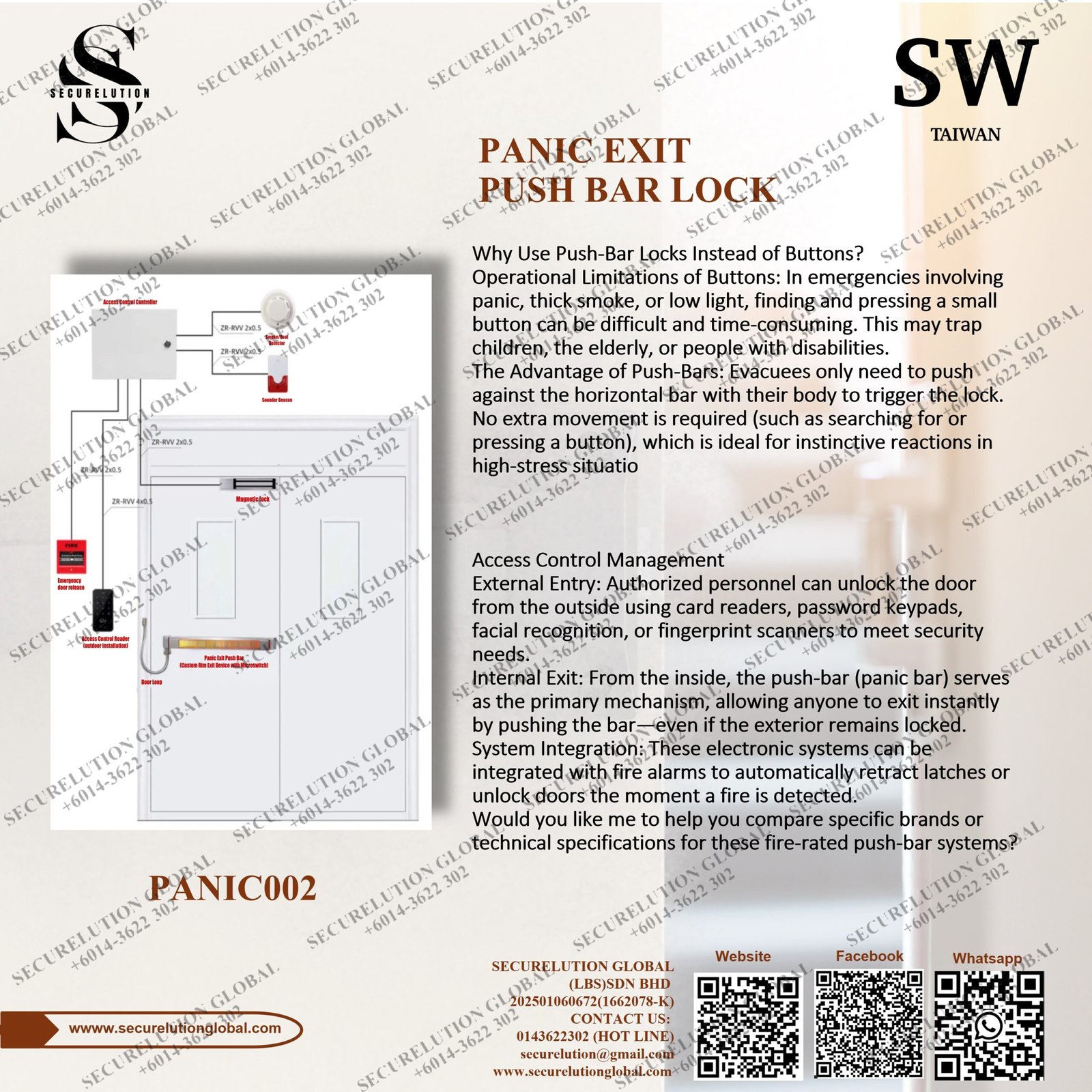
Many commercial venues install access control systems to maintain security and manage the entry and exit of personnel. However, non-compliant access control is a serious violation of fire safety regulations and creates a major safety hazard. By using integrated fire-safety escape push-bar locks, a simple push allows for an immediate opening and a fast exit during an emergency.

Why Use Push-Bar Locks Instead of Buttons?
- Operational Limitations of Buttons: In emergencies involving panic, thick smoke, or low light, finding and pressing a small button can be difficult and time-consuming. This may trap children, the elderly, or people with disabilities.
- The Advantage of Push-Bars: Evacuees only need to push against the horizontal bar with their body to trigger the lock. No extra movement is required (such as searching for or pressing a button), which is ideal for instinctive reactions in high-stress situations.
Access Control Management
- External Entry: Authorized personnel can unlock the door from the outside using card readers, password keypads, facial recognition, or fingerprint scanners to meet security needs.
- Internal Exit: From the inside, the push-bar (panic bar) serves as the primary mechanism, allowing anyone to exit instantly by pushing the bar—even if the exterior remains locked.
- System Integration: These electronic systems can be integrated with fire alarms to automatically retract latches or unlock doors the moment a fire is detected.
Would you like me to help you compare specific brands or technical specifications for these fire-rated push-bar systems?