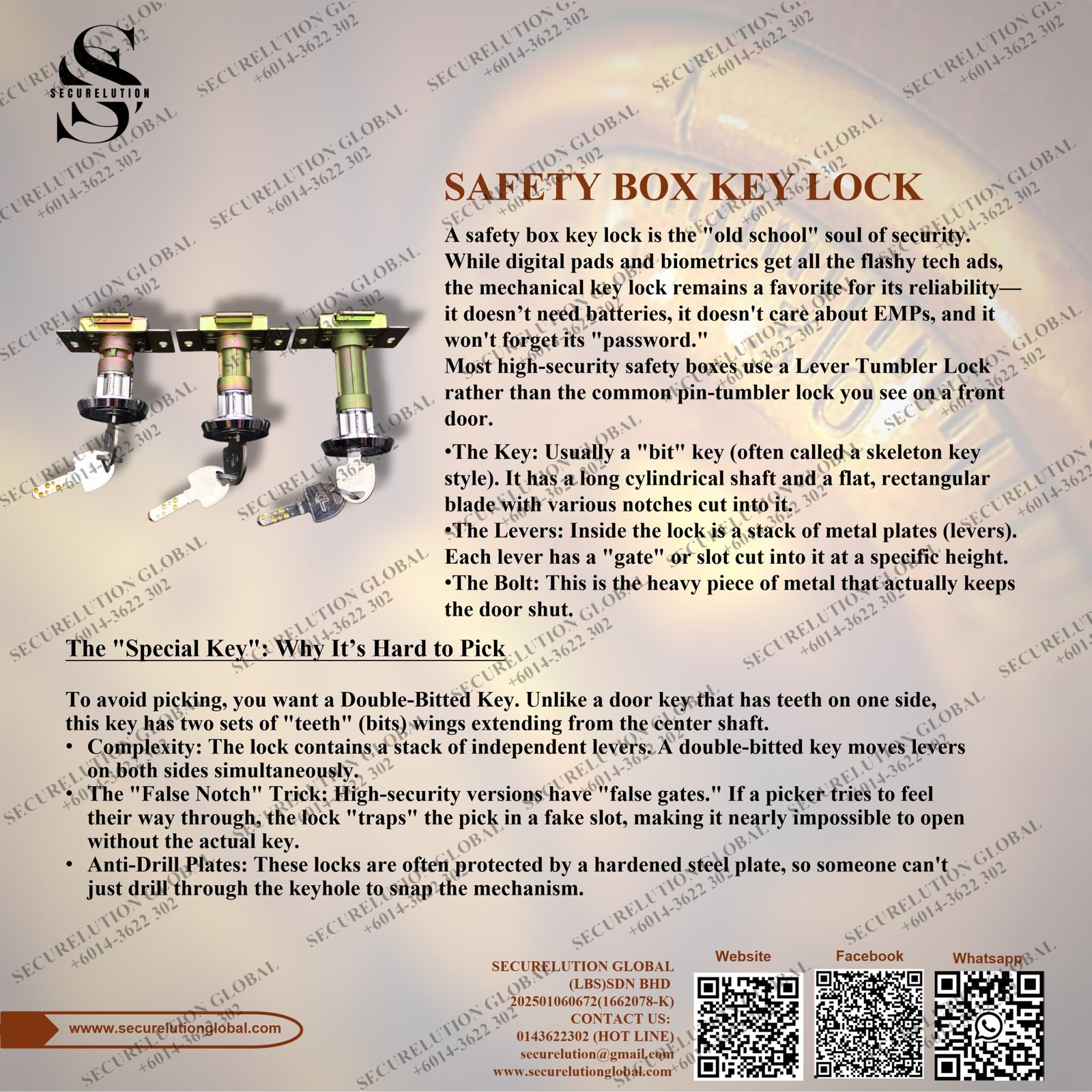
A safety box key lock is the “old school” soul of security. While digital pads and biometrics get all the flashy tech ads, the mechanical key lock remains a favorite for its reliability—it doesn’t need batteries, it doesn’t care about EMPs, and it won’t forget its “password.”
Most high-security safety boxes use a Lever Tumbler Lock rather than the common pin-tumbler lock you see on a front door.
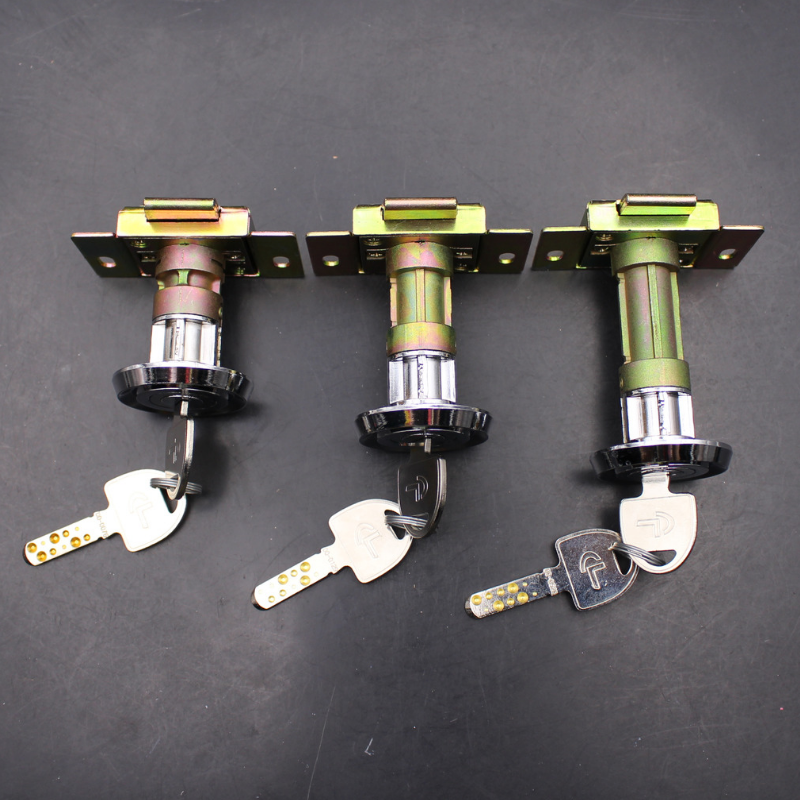
- The Key: Usually a “bit” key (often called a skeleton key style). It has a long cylindrical shaft and a flat, rectangular blade with various notches cut into it.
- The Levers: Inside the lock is a stack of metal plates (levers). Each lever has a “gate” or slot cut into it at a specific height.
- The Bolt: This is the heavy piece of metal that actually keeps the door shut.
The “Special Key”: Why It’s Hard to Pick
To avoid picking, you want a Double-Bitted Key. Unlike a door key that has teeth on one side, this key has two sets of “teeth” (bits) wings extending from the center shaft.
- Complexity: The lock contains a stack of independent levers. A double-bitted key moves levers on both sides simultaneously.
- The “False Notch” Trick: High-security versions have “false gates.” If a picker tries to feel their way through, the lock “traps” the pick in a fake slot, making it nearly impossible to open without the actual key.
- Anti-Drill Plates: These locks are often protected by a hardened steel plate, so someone can’t just drill through the keyhole to snap the mechanism.
Modifying Your Old Safe
Don’t throw that old box away! Converting a safe from a digital or dial lock to a key lock is a common “retrofit.” Here is how that process generally works:
1. Removing the Old Brains
Whether it’s a dead electronic solenoid or an old mechanical dial, the “lock body” on the inside of the door is usually held by a standard footprint (often the “Magic Module” footprint). You unscrew the old unit and remove the external dial or keypad.
2. The Retrofit
You install a Mechanical Key Lock in its place.
- Alignment: The keyhole must align with the existing hole in the safe door.
- The Throw: The lock’s bolt must be compatible with the safe’s internal “boltwork” (the heavy bars that move when you turn the handle).
3. Why This is Better
The Reliability Factor: By modifying the safe to use a key, you eliminate the risk of “solenoid bounce” (where a safe can be bumped open) and you never have to worry about a circuit board failing or batteries leaking and corroding the interior.